

Heritage & imagination
The Orrling Story
From Helsingborg, Sweden, the House of Orrling brings together a family tradition of craftsmanship and an independent creative vision.
From Torsten Orrling’s travels through Europe in 1953 to Håkan’s first atelier and the collections that followed, each chapter reveals a dialogue between art, jewellery and the life around them.
Our History
-
 1953
A Family Tradition
Discover the story
1953
A Family Tradition
Discover the story

1953
A Family Tradition
Orrling Jewellery is rooted in a vibrant family tradition of creativity and craftsmanship. The journey began in 1953 when a young Torsten Orrling, father of Håkan Orrling, embarked on his journeyman travels across Europe. Immersing himself in the world of jewelry design, Torsten honed his skills and laid the foundation for Orrling's enduring connection to this timeless art.
The Orrling story is also enriched by the legacy of G. Åberg, Torsten’s great-uncle. Åberg lived in the bustling artistic hub of Paris, rubbing shoulders with luminaries like Léon Bonnat and Carl Larsson in the dynamic cultural scene of Montmartre. There, he pursued artistic freedom and innovation until his life was tragically cut short by pulmonary tuberculosis at just 25, following a theater performance.
Though his life was brief, Åberg’s spirit lives on through generations, infusing Orrling Jewellery with a unique blend of artistry, tradition, and bold creativity that continues to inspire today.
-
 1971
A Creative Heritage
Discover the story
1971
A Creative Heritage
Discover the story

1971
A Creative Heritage
Håkan Orrling is born in Markaryd, a small town in Sweden. His father, Torsten, is from Stockholm; his mother, Gisela, from Hamburg. They meet in Hamburg while Torsten is travelling through Europe to deepen his knowledge of goldsmithing.
The couple later settle in Markaryd, where Torsten takes his craft in a new direction, retraining and joining the renowned lighting company Hans-Agne Jakobsson as a designer.
-
 1977
Anna — A Creative Beginning
Discover the story
1977
Anna — A Creative Beginning
Discover the story


1977
Anna — A Creative Beginning
Anna Kassai, later Anna Orrling, begins her creative career in hairdressing, opening her own studio in 1996. She runs the studio until 2010, developing her craft and building her own business before dedicating herself fully to Orrling Jewellery.
Her contribution extends far beyond the business itself. Through her unwavering commitment, she has created the freedom, time and resources essential to our shared creative vision. As both a creative partner and a driving force behind our common ambition, Anna has been instrumental in transforming ideas into reality.
Without her dedication, creativity and extraordinary contribution, the journey of Orrling Jewellery would simply not have been possible.
-
 1989
The Goldsmith’s Journey
Discover the story
1989
The Goldsmith’s Journey
Discover the story


1989
The Goldsmith’s Journey
I entered the goldsmith academy and began my training. From the beginning, I was drawn to the quiet mystery of shaping precious gold a craft where creativity could move freely through the hands.
An early position under poor leadership taught me an important lesson. It gave me the clarity and determination to write my own story.
A few years after the education , I opened my first atelier guided by the belief that creativity, craftsmanship and respect should always go hand in hand.
-
 1990
The Gisela Flower
Discover the story
1990
The Gisela Flower
Discover the story


1990
The Gisela Flower
The first Gisela Flower design takes shape in 1990, beginning a creative story that would be revisited and refined in the years to come.
-
 1993
A New Perspective
Discover the story
1993
A New Perspective
Discover the story


1993
A New Perspective
I joined students from across Europe at what was then called the Institute for Precious Metals in Copenhagen / Emdrup, attending a university course focused on design.
The education opened a new creative dimension introducing new ways of thinking that would forever shape how I see and approach the art of jewelry.
-
 1997
The First Atelier
Discover the story
1997
The First Atelier
Discover the story


1997
The First Atelier
After several years moving quietly between different ateliers learning through the discipline of hand, material, and process I opened my own studio, Artmetall. It marked the beginning of a more personal path, a place where creativity could unfold with greater freedom.
The work from this period explored sculptural jewelry in mixed materials: acrylic, plastics, and organic elements brought into dialogue with precious stones. Forms were shaped by impressions gathered during travels and expeditions—tribal expressions encountered in the Serengeti, and the vibrant color and gemstone traditions of Jaipur.
Within Artmetall these worlds met in a subtle tension: raw and refined, organic and precious. The resulting pieces moved between jewelry and small sculpture objects of adornment carrying traces of landscape, journey, and memory.
All of this emerged within a remarkably small space of just 25 square meters, where a creative atelier and an open workspace were combined with a contemporary showroom an intimate environment where making, displaying, and experimentation existed side by side.
-
 2001
A New Chapter in Fine Jewellery
Discover the story
2001
A New Chapter in Fine Jewellery
Discover the story


2001
A New Chapter in Fine Jewellery
The first atelier was small just 25 square meters. Yet it quickly began to feel even smaller as new ideas, sketches and creations continued to grow.
What began as a modest workspace soon became too limited for the expanding vision. The need for more room both for craftsmanship and for welcoming clients became clear.
In 2001, we made the decision to move to a larger atelier with a more prominent showroom opening the door to the next chapter.
This was also the moment to redefine our direction. We stepped fully into fine jewellery, introducing the first creations set with carefully selected precious stones. With this new chapter, we also introduced a new logo, marking the evolution of the brand and its identity.
-
 2003
Art, Love and a Shared Journey
Discover the story
2003
Art, Love and a Shared Journey
Discover the story
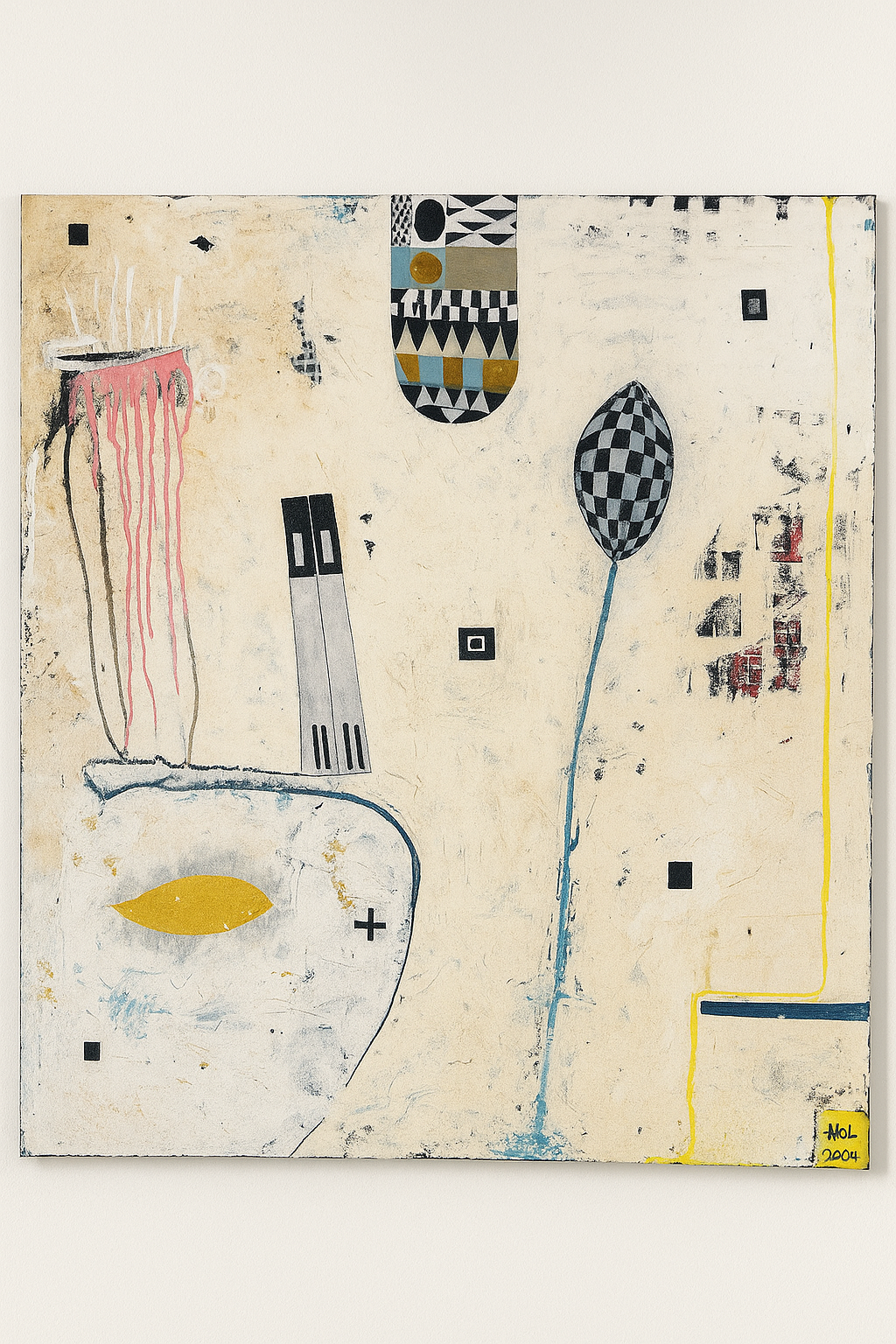

2003
Art, Love and a Shared Journey
Håkan Orrling launched his first solo art exhibition, presenting mixed-media works where precious metals were interwoven into oil and canvas.
The exhibition explored the borderland between objects meant to be worn and objects meant to be seen questioning where jewelry ends and art begins, and where the line lies between art and craft.
That same year, Håkan and Anna meet and fall in love. Soon afterwards, they travel together to India to source gemstones. The journey sparks a shared interest in jewellery and the desire to work together, beginning a partnership in both life and creativity.
-
 2005
Amour Griffe
Discover the story
2005
Amour Griffe
Discover the story
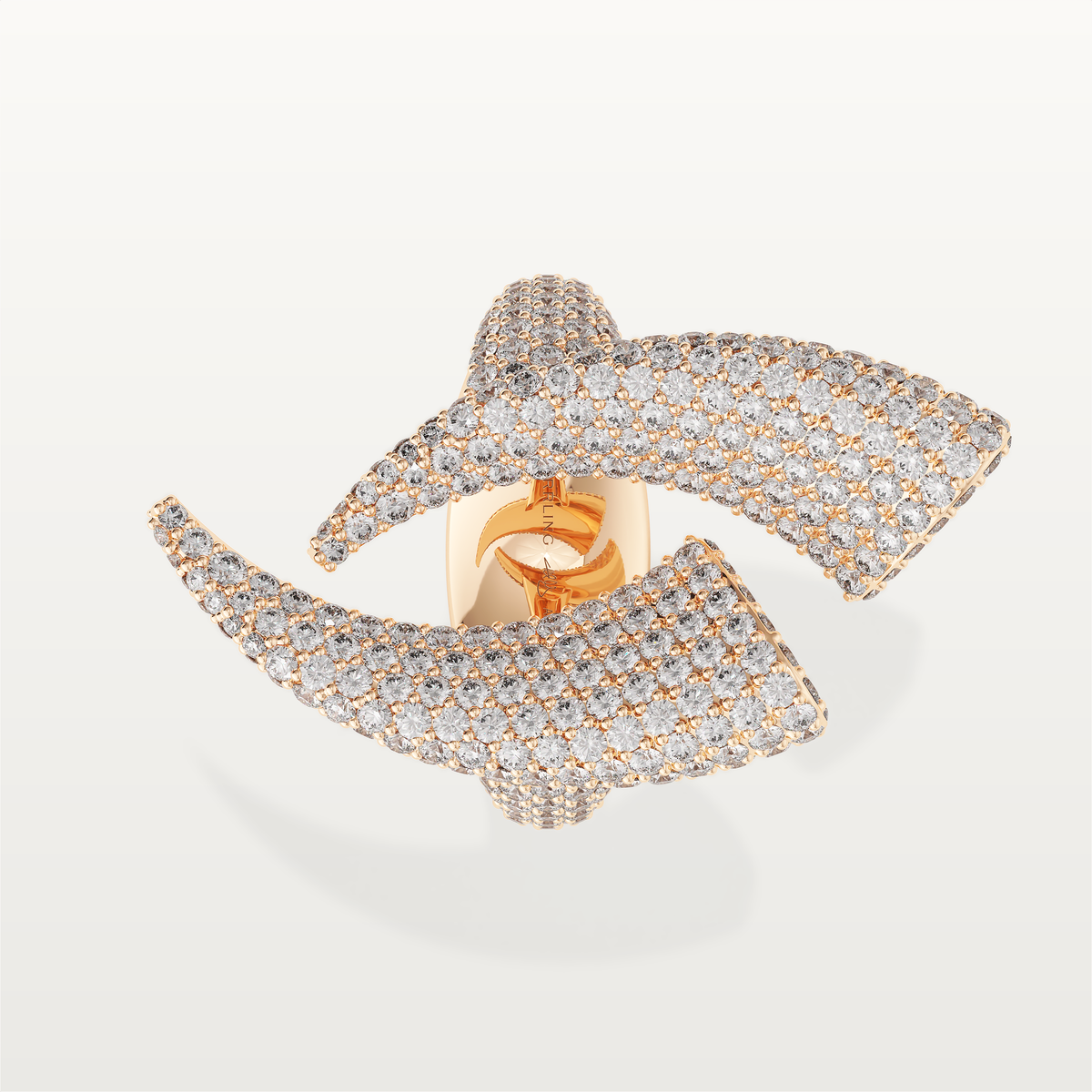
2005
Amour Griffe
In 2005, the Amour Griffe was born from a simple idea: love is never only gentle. A heart forms the base of the piece. From its center rises a talon-shaped griffe, growing naturally from the curve of the heart.
The design reflects the quiet paradox of love and life beauty and strength, tenderness and edge. A symbol where emotion takes form in precious metal.
-
 2006
The Bodhi Tree
Discover the story
2006
The Bodhi Tree
Discover the story

2006
The Bodhi Tree
In 2006, we introduced the concept The Bodhi Tree a framework created to challenge the boundaries of an otherwise stereotypical jewellery landscape.
Like a root system, the concept allowed spirituality and material reality to grow from the same source. It asked simple but essential questions: Be yourself. Find yourself. Which piece of jewellery are you? What holds the greater value emotional meaning or the size of a diamond?
Questions were raised whose answers may never be fully given or perhaps are meant to reveal themselves slowly over time.
Within the branching structure of The Bodhi Tree, many ideas began to grow. It was here that the foundation of a true brand identity emerged, and where the first thoughts behind many of today’s designs first took shape.
-
 2007
Listening to Life
Discover the story
2007
Listening to Life
Discover the story


2007
Listening to Life
In 2007, Anna and Håkan marry, beginning their shared journey as husband and wife.
In 2007, life changed in the most profound way. My wife and companion Anna gave birth to our first child.
The greatest moment also raised the greatest questions. It led us to listen to life in a new way with a deeper awareness of fragility, love and responsibility.
From that moment, these reflections quietly began to influence our work, shaping the expression of our jewellery with a new sensitivity to what truly matters.
-
 2008
A New Setting
Discover the story
2008
A New Setting
Discover the story


2008
A New Setting
In 2008, we took our largest step so far both creatively and economically. We designed and built a true luxury showroom, entirely handcrafted by Inredo and designed by us.
The space was conceived to offer clients a new experience a place where the atmosphere, materials and craftsmanship reflected the same care found in our jewellery.
It also allowed us to present the growing collection of high jewellery pieces now being created in our atelier, giving them the setting they deserved
-
 2009–2016
A Time to Grow
Discover the story
2009–2016
A Time to Grow
Discover the story

2009–2016
A Time to Grow
From 2009 to 2016, family life and creative development grew together. The birth of Håkan and Anna’s two younger children brought new perspectives to both life and work.
Following the investments of 2008, the atelier focused on organic growth. Events, exhibitions and a small network of selected retailers brought the jewellery to a wider audience.
The Gisela Flower was revisited and refined, drawing inspiration from the light, flowing forms of Henri Matisse. New collections, including Vermilion Zone and Little Nomad, emerged from the same period of exploration.
These years became an essential part of the house’s creative foundation: a time of searching, refining and finding its own path.
-
 2010
A Shared Focus
Discover the story
2010
A Shared Focus
Discover the story

2010
A Shared Focus
As the demands of running two businesses grow, Anna sells her hair studio after fourteen years.
The decision allows her to focus fully on supporting and developing Orrling Jewellery, bringing her creative experience and entrepreneurial perspective to the couple’s shared work.
-
 2017
Links — A Shared Purpose
Discover the story
2017
Links — A Shared Purpose
Discover the story


2017
Links — A Shared Purpose
In collaboration with Humanium Metal, we launched the Links project — transforming metal from destroyed illegal firearms into meaningful jewelry.
Humanium Metal worked with authorities around the world to seize and permanently destroy illegal weapons, melting them down into a certified material symbolizing the transition from violence to hope. Using this material, we created one of the first 3D-printed jewelry pieces in the world made from Humanium Metal.
The Links bracelet became a symbol of connection — between design, innovation, and social responsibility. A portion of every bracelet sold supported the initiative’s mission to remove illegal weapons from circulation.
Although the Humanium Metal initiative has since concluded, its impact remains profound. Together we helped contribute to the destruction of tens of thousands of illegal firearms worldwide, ensuring they would never return to use.
A chapter in our history where craftsmanship and purpose came together to transform instruments of harm into symbols of hope.
-
 2019
The Beginnings of Molekules
Discover the story
2019
The Beginnings of Molekules
Discover the story


2019
The Beginnings of Molekules
Inspired by Etruscan granulation, the studio begins experimenting with tiny spheres arranged in simplified patterns. The forms evoke particles, molecules and the building blocks of matter. The working name is Molekules — a name that remains today.
It is also a period of significant growth, driven in part by a collaboration with Swedish supercar marque Koenigsegg. Commissioned to design its range of jewellery accessories, the studio produces thousands of bracelets and necklaces for customers around the world.
-
 2020
A New Name, New Logo a Larger Vision
Discover the story
2020
A New Name, New Logo a Larger Vision
Discover the story

2020
A New Name, New Logo a Larger Vision
As the business grows, the search begins for a larger studio. An industrial space with expansive street-facing windows in central Helsingborg offers room for the next chapter: a move from 100 to 350 square metres.
Alongside the move comes a new visual identity. Orrling becomes the brand name, replacing Artmetall, the name under which the studio has worked since its founding in 1997.
The Orrling monogram is born from the intertwining letters A, H and O — Anna, Håkan and Orrling. More than a visual signature, it becomes a symbol of their shared creative vision, partnership and the journey they have built together.
-
 2021
Opening the Doors
Discover the story
2021
Opening the Doors
Discover the story


2021
Opening the Doors
The new atelier and showroom are completed and officially open in November 2021, bringing the studio’s craft and collections together under one roof.
That year, a visit to New York brings a first meeting with Bergdorf Goodman and discussions with buyers at Saks Fifth Avenue. The conversations with Saks lead to an agreement to begin working together for the 2022 season. An internal restructuring at Saks subsequently puts plans to introduce new brands on hold.
-
 2023
Recognition and a New Chapter in America
Discover the story
2023
Recognition and a New Chapter in America
Discover the story

2023
Recognition and a New Chapter in America
Håkan Orrling is named a finalist in the Fine Jewelry category of Fashion Group International’s Rising Star Awards in New York, listed under ARILD.
The establishment of Orrling Inc. marks a commitment to the United States and the beginning of a new chapter for the brand.
That same year, Orrling is commissioned to design a bracelet for World Childhood Foundation in celebration of its forthcoming 25th anniversary. The Ballon Bracelet is born.
-
 2024
A Year of Royal Milestones
Discover the story
2024
A Year of Royal Milestones
Discover the story
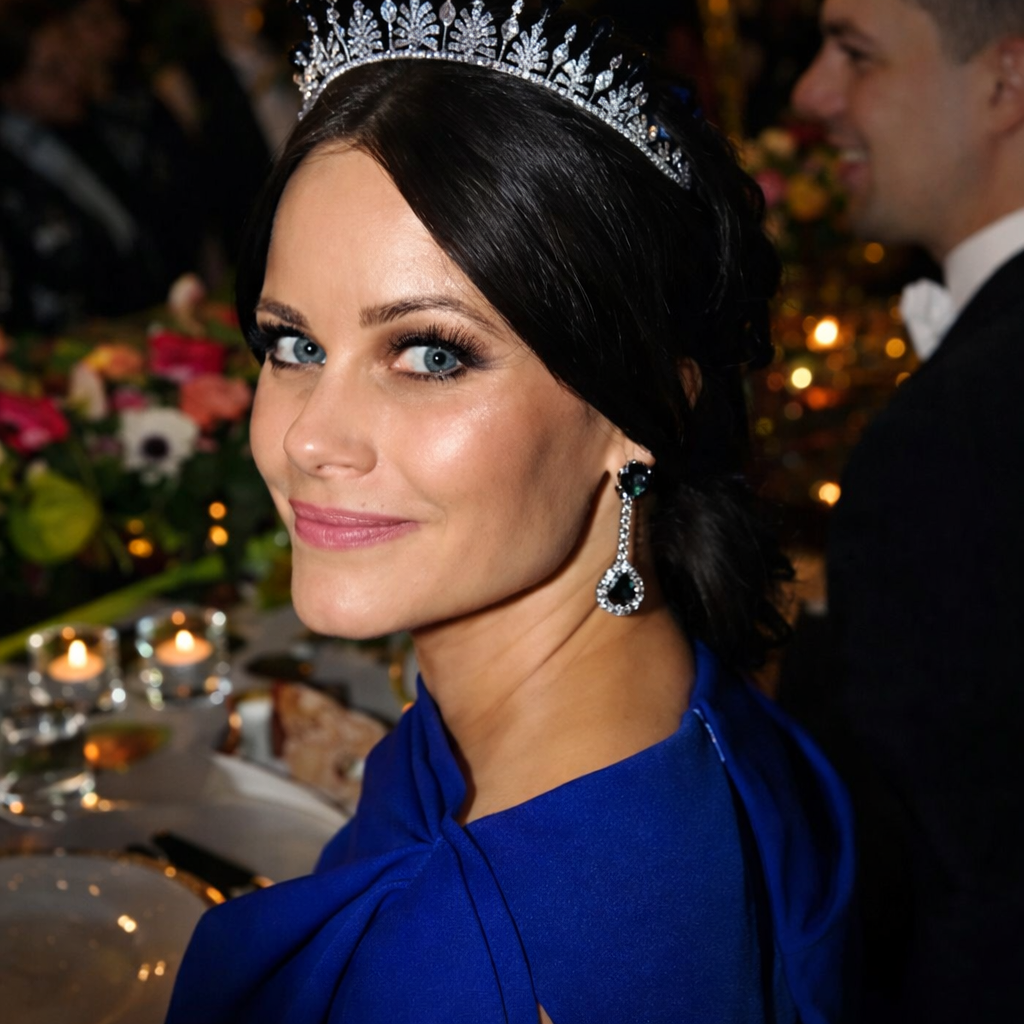

2024
A Year of Royal Milestones
Orrling takes part in World Childhood Foundation’s 25th anniversary celebrations. Sharing a table with Princess Madeleine, the Orrling team presents her with the first Ballon Necklace in 18-karat gold.
That same year, the studio is honoured to design chandelier earrings and a cocktail ring for Princess Sofia to wear at the Nobel Banquet. She wears both pieces during the celebrations, with the cocktail ring receiving a mention in the live television coverage of the evening.
-
 2025
Introducing Icon
Discover the story
2025
Introducing Icon
Discover the story


2025
Introducing Icon
The first Icon Bracelets and their accompanying system make their quiet debut. The concept is warmly received from the outset, attracting attention and marking the beginning of a new chapter for Orrling.
-
 2026
Orrling 2.0
Discover the story
2026
Orrling 2.0
Discover the story

2026
Orrling 2.0
Orrling enters a new chapter with the launch of Orrling 2.0. An extensive creative effort brings a new online experience to life, with the Icon Bracelet Configurator at its heart.
As the brand reaches a wider audience, its designs begin attracting attention from celebrities in both the United States and Scandinavia.


